
What are we talking about, when we talk about Versailles Literature

Updated: Oct 11, 2021
The online buzzword and an attempt to understand the Chinese style narcissism
一些关于凡尔赛文学,炫富学,中式自恋学,社交媒体经济的思考
Versailles, a city in the department of the Yvelines France, has somehow found its own fame in China. The popular phrase - “Versailles Literature” (Chinese凡尔赛文学) ,which describes a particular way of expression where the speaker seems to be humble but is in fact showing off. Otherwise known as “humble bragging”.
Its popularity came from many reasons. Some people find it annoying; some people find it funny. No matter the reason, this buzzword is not only causing people to create topics around it, also attempts to try to understand the deeper meanings under the phenomenon. It is not an exaggeration to say, people who are living in this digital time, all the intricate emotions paint a detailed picture of people’s emotional life nowadays.

Young Chinese fans first took notice of the city of Versailles, because of a popular Japanese manga “The Rose of Versailles”. It is a particular type of Japanese manga called shōjo manga (meaning: young women's manga). “The Rose of Versailles” was created by Riyoko Ikeda between 1972 to 1973. As the name suggests, shōjo manga’s main readership are young females, and romance is the main theme.
“The Rose of Versailles” is a fictional story of a girl, who disguised herself as a man to work in the Versailles palace as a guard for the French royal family. The story is set in the time of the French revolution period. It became popular in China because of its beautiful illustration of the characters and its fantasy world. The story paints beautiful pictures where people dress up in lavish clothes, live in grand palaces surrounded by glorious gardens of various sizes. In this story, the characters do not scream “RICH”, but “CLASS”.

Subsequently, Versailles has become a sign of pure luxury. A representative of the OLD MONEY, adding the “I have seen it all” attitude. In the beginning of 2020, Chinese netizens started to use "Versailles Literature" to describe someone who is showing off that they are both rich and classy.
Since the 1978, when the Chinese economic reform started, more than 800 million Chinese people have been pulled out of the poverty line. Prior to that, most Chinese experienced similar living conditions, as the scarcity in supply of goods was common all over the country. There was simply no OLD MONEY in China at that time. Ever since the economic reform, the Chinese economy growth rate has been among the highest in the world.
Around the early 2000s, a term “Coal Mine Owner” is used to describe someone who possesses a large amount of money but with no taste. Later, people would jokingly talk about someone, or themselves, about owning a coal mine, subtly hinting they are rich.

As time passes on, if someone explicitly shows off their cash, such as exhibiting gold and the size of an egg diamond jewelleries, teamed with luxury brands with big labels on the front, they get looked down upon by the younger generation. The issue is no longer about one’s possessions or money, since for the younger generation, having lots of money is still being desired but not so much admired. Instead, people (especially millennials) start to appreciate good tastes in many perspectives, as it is seen as a sign of being highly educated, born in an influential family, and just simply superior by default.
When first noticed on the Chinese social media Weibo, the “Versailles Literature" was meant to impress while being humble, take the following sentence as an example:
"I can't believe it, I have been eating big meals, snacks, and cakes for more than two months. But my weight stays 45kg. I want to ask everyone in my friends' circle (WeChat moment), how to gain weight effectively?"
or
" I would rather have a real apple for a snack, than an Apple computer for a gift. My family doesn't understand me sometimes."
or
"My boyfriend just bought me a pink Lamborghini for a birthday gift, such a horrendous color! How can I tell him I don't like pink?”
The trend of showing off in “Versailles literature" style soon picked up by other netizens, who have been enthusiastically studying others’ Weibo tweets to spot any suspicious Versailles style boasting. The shorted Chinese word for it, is "凡学", which literally means "School of Normal ". This double meaning is a funny turn for the original word “Versailles Literature", which is everything but normal.
About the myth of the “Versailles literature" popularity, maybe it is the combination of Chinese culture and the modern world’s self-obsession that makes it in demand.
Traditionally, Chinese culture expects practical, gentle, and modest behavior from its people. To act and behave in a way that is accepted by the local community and the society is crucial. However, these values often conflict with today's view of being successful. As self-expressive, unique, individualistic, outspoken, and attention seeking personalities are often looked up to. The internet and social media provides them the chance to flaunt themselves, to become the center of their own universe. And in return, this kind of people can easily cultivate followers on social media, bring big data* to their platforms, and eventually turn it into monetary values.
*Data is the value that can be used in various channels in the digital age, while in China a data attractor is someone who has a big number of followers, also grabs public attention. The very top of the big data attractors are called “super-influencers” (顶流). They get paid to present brands.
As a result of that, being humble and modest is no longer seen as desirable. Because that means there is no attention, and without attention one might be happy but viewed by outsiders as miserable. Everyone is seeking attention. Self-love is not only by thinking, also by showing.
Digital narcissism is a global trend. As American academics Jean Twenge and Keith Campbell – the authors of “The Narcissism Epidemic” described, the trend of narcissism is on the rise worldwide. And when self-expression is being used to get attention for someone to feel better about themselves; this behavior can be dangerous.

Therefore, pretending to be humble while showing off, the “Versailles Literature” style does seem to be the Chinese adoption of digital narcissism.
However, it is not always a harmless flaunting for some. In China, there are concerns that the whole “Versailles Literature” trend reflects a deeper social issue. A new term the “Princess Disease” (Chinese 公主病) is used to describe someone who has profound level of self-obsession. They might use other people to feel better about themselves, despite other peoples’ feelings. If you engage into a relationship with a “Princess Disease” patient, you are on your way to lose. Because the patient is only seeking his/her own feelings of success, anything else is secondary.
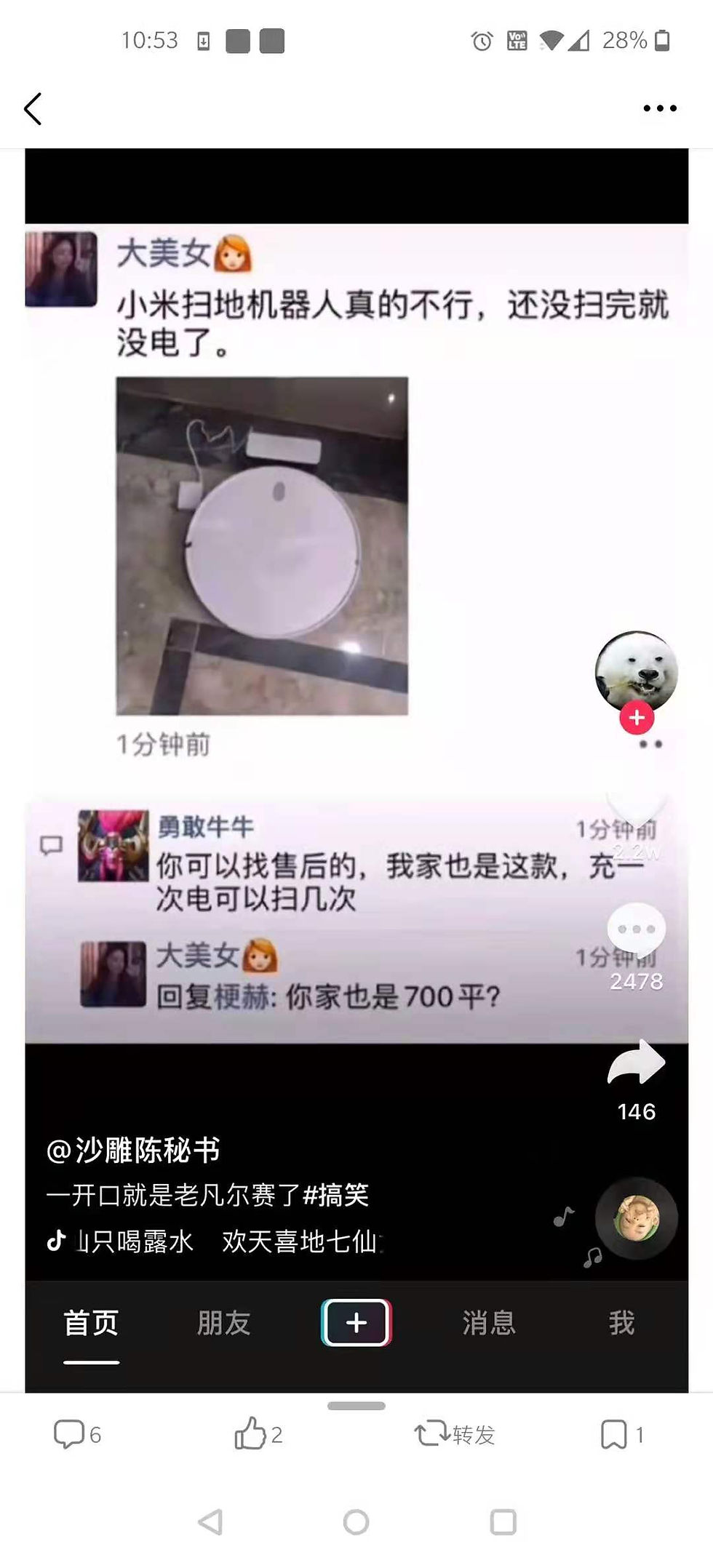
“Xiaomi vacuum robot couldn’t even finish my whole home, the battery had already run out.”
Comment: “It shouldn’t be, I have the same vacuum cleaner and we can use it many times before it needs charging.”
Reply: “Your house is 700 sqm in size as well?”
It might have all started with a healthy amount of encouragement and self-love, aka the “Chicken Soup Remedy” (Chinese 鸡汤学), that has been talked about since the early 2000s, much earlier than the “Versailles Literature". The central concept of “the chicken soup remedy” is to encourage someone to love themselves more; and give more compassion to themselves. However, this trend is made fun of because of its cheeky and overly confident style.
Fundamentally, we all want to believe that we are unique and special, and other people see us as successful. Even though deep down we know that most of us may be just ordinary. And maybe that is hard to accept for many people. Some researchers suggest that loneliness and solitude are the core reasons for the “Versailles Literature” trend.
Because our souls are homeless.
And the numerous homeless souls turn into the engine of the social media economy, pushing the top data super influencers to the top. As the Chinese cities continue to grow, tens of millions of people leave their home, and their extensive family, in search for a better future in an unfamiliar bigger city. Numerous hometowns became people’s backdrop, a place where we cherish but never return to.
Instead of weekend family gatherings, singles, couples and small families fill up the society, fueling up the “Lonely Economy” (Chinese 孤独经济) and “Self-Pleasing Economy” (Chinese 悦己经济).
In the end, this is an ongoing topic in China, and social media is still prominent in peoples’ lives. As we cannot put down our phones, the “Versailles Literature” trend will go away, but other trends will also emerge. This is our life in the digital age, for the better or the worse.


Comments